
Start with what you cook, not the shiny set on the shelf
Singapore home kitchens are busy and compact. One burner might simmer soup while another fries eggs before work. Humidity hangs around metal edges. Induction glass tops are common in newer HDB and condo units. The pan that looks premium in a photo can still be the wrong tool for your weeknight rhythm.
Choosing cookware well is less about collecting every size and more about matching material, heat source, and the dishes you repeat. This guide stays practical: materials first, then induction checks, then how a frying pan and a small cookware set divide daily work.
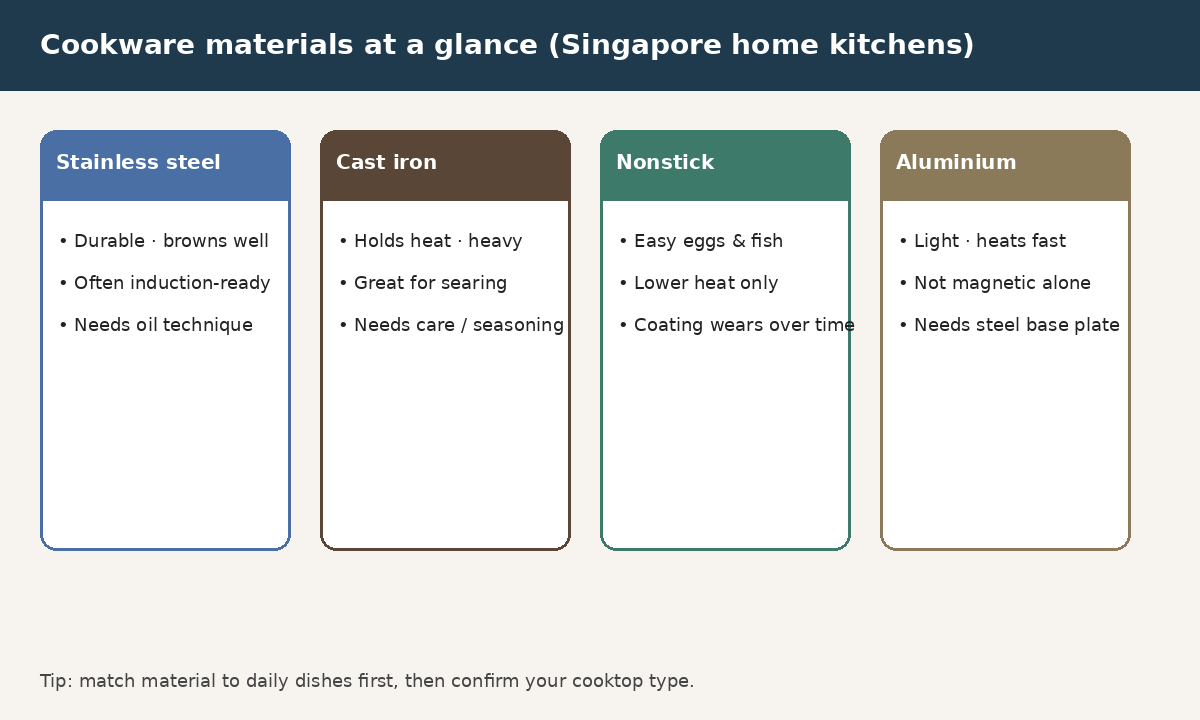
Pick material for the jobs you cook most. Looks come second.
Materials that survive daily Singapore cooking
Stainless steel is the quiet workhorse. It browns well, does not react with tomato or tamarind sauces, and many magnetic grades heat on induction. It asks for patience: preheat, add oil, and wait for food to release instead of scraping too early. A good stainless steel pan often becomes the piece you reach for when you want colour on meat or firm vegetables.
Cast iron and carbon steel hold heat for searing and wok-style blasts, but they are heavier and need drying after wash so rust stays away in humid flats. Nonstick shines for eggs, fish, and sticky sauces at medium heat; coatings age with metal utensils and high flames. Bare aluminium heats quickly and stays light, yet alone it usually fails the magnet test unless a steel plate is bonded underneath.
Independent testers still frame the choice as cooktop match plus cooking style. The Consumer Reports cookware buying guide is a solid checklist for flat bases, durability, and induction notes before you compare finishes.
Induction in Singapore homes: prove it with a magnet
Induction only heats ferromagnetic bases. If a fridge magnet clings firmly across the centre and toward the edge of the base, the pan should work. A weak tug or a slide-off usually means the hob will ignore it. Labels and coil symbols help online, but the magnet is the honest field test for pans you already own.
Related watch: a clear walkthrough of how induction heats a magnetic pan (GE Appliances).
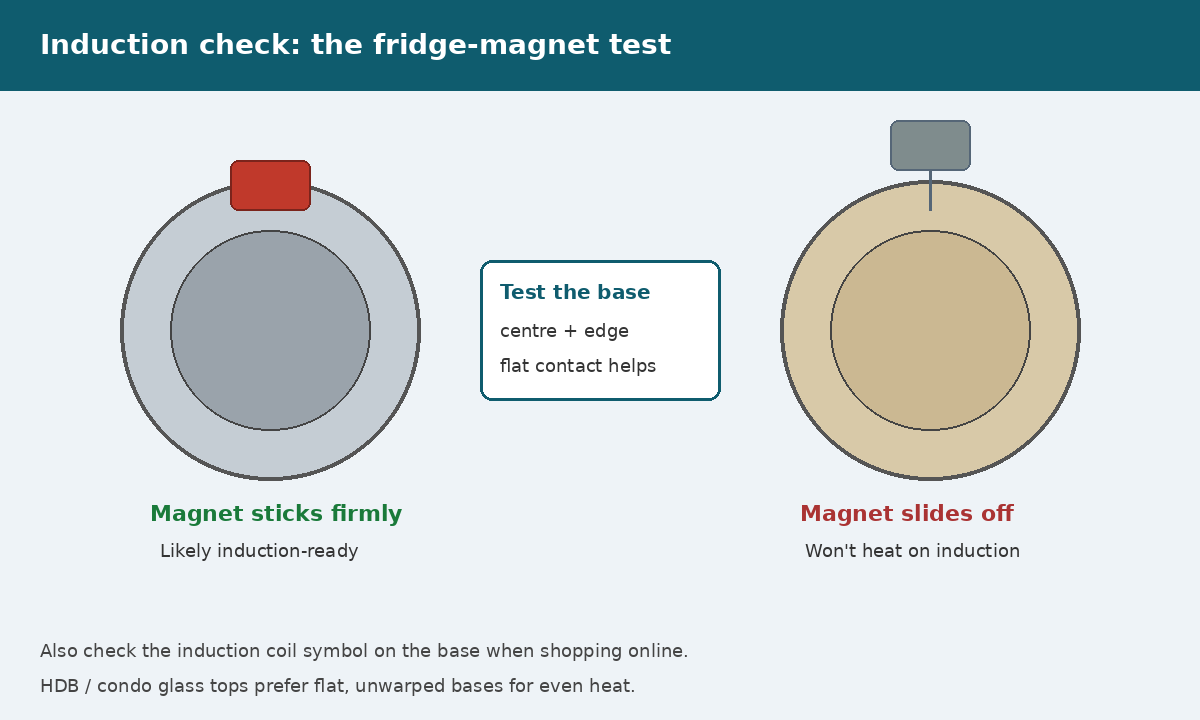
Test centre and edge. Flat contact on glass tops keeps heat even.
Consumer advocates make the same point in plain language: magnetism first, then base flatness so the zone senses the pan. Australia’s CHOICE induction cookware buying guide walks through which materials work and why aluminium and copper need a ferrous base layer. For a second lab-tested angle, see how Consumer Reports explains induction compatibility with the same magnet check.
Frying pans for weeknights vs a full cookware set
Most Singapore households lean on one or two frying pans more than a twelve-piece tower. A mid-size cooking pan Singapore cooks actually use might handle omelettes, stir-fried greens, and shallow braises. Keep a taller pot for soups and noodles. A cookware set helps when lids, saucepans, and a stockpot share the same handle feel and nesting size in a tight cabinet.
When you browse everyday cookware ranges, compare base thickness and lid fit more than the piece count on the box. Shared handles and nesting sizes matter more in a tight Singapore cabinet than a flashy piece count.
For open-top searing and eggs, skim frying pan options worth comparing with the same magnet and flatness checks. Local brand collection pages are useful for side-by-side shapes, not as a substitute for testing how a pan sits on your own hob.
A calm weekend shortlist
Before another impulse buy:
- List the five dishes you cook most in a normal week.
- Note your cooktop (induction, ceramic, gas) and run the magnet test on what you already own.
- Choose one primary frying pan material that fits those dishes, then decide if a small cookware set fills gaps.
- Measure cabinet depth and burner zones so oversized bases do not overhang or refuse to activate.
- Sleep on the shortlist overnight; humid storage and dishwasher habits matter as much as the first sear.
Good kitchen cookware decisions feel a little dull on purpose. Match material to food, prove induction with a magnet, and let one reliable pan earn its place before the cupboard fills up.